10 Ways to Improve Your Communication Skills at Work and School

Communication skills are important in almost every part of life. You need them for school projects, job interviews, team meetings, presentations, emails, and daily conversations.
The good news is that communication is a skill you can improve. You do not need to be naturally outgoing or perfect at speaking. With the right habits, you can become clearer, more confident, and easier to understand.
What Are Communication Skills?
Communication skills are the abilities you use to share information, ideas, feelings, and opinions with others.
They include speaking, listening, writing, reading body language, asking questions, giving feedback, and presenting ideas. Strong communication helps people work together, solve problems, avoid misunderstandings, and build trust.
Good communication is not about using big words. It is about making your message clear for the other person.
Why Are Communication Skills Important?
Communication skills are important because most work and school tasks involve other people.
In the workplace, strong communication can help you explain ideas, join meetings, manage projects, write professional emails, and handle conflict. In school, it can help you give presentations, work in groups, ask better questions, and express your opinions clearly.
People with strong communication skills often seem more confident and reliable. They can explain what they mean, understand others faster, and reduce confusion.
1. Practice Active Listening
Listening is one of the most important communication skills. Many people listen only to reply, not to understand.
Active listening means paying full attention to the speaker. You should focus on what they are saying, not only on what you want to say next.
You can practice active listening by:
Looking at the speaker
Avoiding interruptions
Nodding or giving small responses
Repeating key points in your own words
Asking follow-up questions
For example, instead of saying, “I get it,” you can say, “So you mean the project is delayed because the design part needs more time, right?”
This shows that you are listening and helps avoid misunderstandings.
2. Think Before You Speak
Clear communication often starts before you say anything. If your thoughts are messy, your message will also sound messy.
Before speaking, ask yourself:
What is my main point?
Who am I talking to?
What does this person need to know?
What action do I want after this conversation?
This is especially useful in meetings, interviews, presentations, and difficult conversations.
For example, instead of saying everything you know about a topic, focus on the most important message first. Then add details if needed.
A simple structure can help:
Main point
Reason
Example
Next step
This makes your communication easier to follow.
3. Use Simple and Clear Language
Good communication does not mean using complicated words. In most cases, simple language is better.
Try to avoid long sentences, unclear words, and unnecessary jargon. Your goal is not to sound smart. Your goal is to help people understand you quickly.
For example:
Unclear:
“We need to optimize the current workflow to enhance cross-functional operational efficiency.”
Clear:
“We need to improve the process so different teams can work together faster.”
Simple language is especially important in emails, presentations, customer messages, and team updates. If people need to read your message twice, it may not be clear enough.
4. Improve Your Body Language
Communication is not only about words. Your body language also sends a message.
Good body language can make you seem more confident, open, and professional. Poor body language can make you seem nervous, bored, or defensive, even if your words are good.
To improve your body language:
Stand or sit straight
Keep natural eye contact
Avoid crossing your arms too much
Do not look at your phone during conversations
Use small gestures to support your words
Face the person you are speaking with
Body language should feel natural. You do not need to act like a public speaker all the time. The goal is to show attention, respect, and confidence.
5. Ask Better Questions
Good communicators ask good questions. Questions help you understand others, avoid mistakes, and keep conversations moving.
Instead of guessing what someone means, ask a question.
For example:
“Can you explain what you mean by that?”
“What is the main goal of this project?”
“What deadline should we follow?”
“What does success look like here?”
“Can you give me an example?”
Better questions are especially useful at work. They help you understand tasks clearly before starting. This can save time and reduce rework.
Asking questions does not make you look weak. It often makes you look thoughtful and responsible.
6. Learn to Give and Receive Feedback
Feedback is a major part of communication. You need to know how to give feedback without being rude and receive feedback without becoming defensive.
When giving feedback, focus on the work or behavior, not the person.
Poor feedback:
“You are bad at explaining things.”
Better feedback:
“The update would be easier to follow if you added the project goal at the beginning.”
When receiving feedback, listen first. Do not rush to defend yourself. You can ask questions like:
“Can you give me an example?”
“What part should I improve first?”
“How would you suggest I change it?”
Feedback is not always comfortable, but it helps you grow faster.
7. Improve Your Writing Skills
Many important conversations happen in writing. Emails, reports, messages, resumes, proposals, and project updates all require clear written communication.
Good writing should be easy to read. Before sending a message, check whether it answers these questions:
What is the purpose?
What does the reader need to know?
Is there a clear next step?
Is the tone professional?
Can I make it shorter?
For work messages, try to put the most important point near the beginning.
For example:
“Hi Sarah, I finished the report draft. Could you review the data section by Friday?”
This is better than a long message where the request is hidden at the end.
Clear writing saves time for both you and the reader.
8. Adapt Your Message to Your Audience
Different people need different types of communication. A message for your manager may be different from a message for a classmate, customer, teacher, or teammate.
Before communicating, think about your audience.
Do they need a quick summary or full details?
Do they understand the topic already?
Do they prefer formal or casual language?
Are they looking for information, advice, or a decision?
For example, when speaking to a manager, you may need to focus on results and next steps. When explaining something to a beginner, you may need to use simpler examples.
Strong communicators do not use the same style for every situation. They adjust based on the person and goal.
9. Practice Public Speaking and Presentations
Presentation skills are a key part of communication. Even if you do not give formal speeches often, you may still need to speak in meetings, interviews, classes, or team discussions.
To improve your presentation skills:
Start with a clear main idea
Use a simple structure
Avoid putting too much text on slides
Practice out loud
Speak slower than usual
Use examples to explain your points
End with a clear conclusion or next step
You do not need to sound perfect. A good presentation is clear, organized, and useful for the audience.
If you feel nervous, practice with a short topic first. The more you speak, the more natural it becomes.
10. Pay Attention to Tone
Tone is the feeling behind your words. The same message can sound polite, rude, friendly, cold, confident, or uncertain depending on tone.
For example:
Too direct:
“Send me the file now.”
Better:
“Could you send me the file when you have a chance today?”
Tone is especially important in written messages because people cannot hear your voice or see your facial expression. A short message may sound rude even if you did not mean it that way.
Before sending an email or message, read it once and ask yourself: “Could this sound too harsh or unclear?”
A respectful tone helps build better relationships.
How to Improve Communication Skills Faster
The best way to improve communication skills is to practice in real situations.
Start small. Try to make your next email clearer. Ask one better question in a meeting. Practice listening without interrupting. Give a short update with a clear structure.
You can also record yourself speaking and listen to the playback. This may feel uncomfortable at first, but it helps you notice filler words, unclear points, or speaking speed.
Another good habit is to observe strong communicators around you. Notice how they explain ideas, ask questions, write messages, or lead discussions. Then try to learn from their style.
Common Communication Mistakes to Avoid
One common mistake is talking too much without a clear point. Long communication is not always better.
Another mistake is interrupting people too quickly. This can make others feel ignored.
A third mistake is using unclear words like “soon,” “later,” or “as soon as possible” when a specific deadline would be better.
A fourth mistake is ignoring tone. Even a correct message can create conflict if it sounds rude.
A final mistake is assuming people understand you. Good communicators check understanding instead of guessing.
Use Dokie AI to Communicate Ideas More Clearly
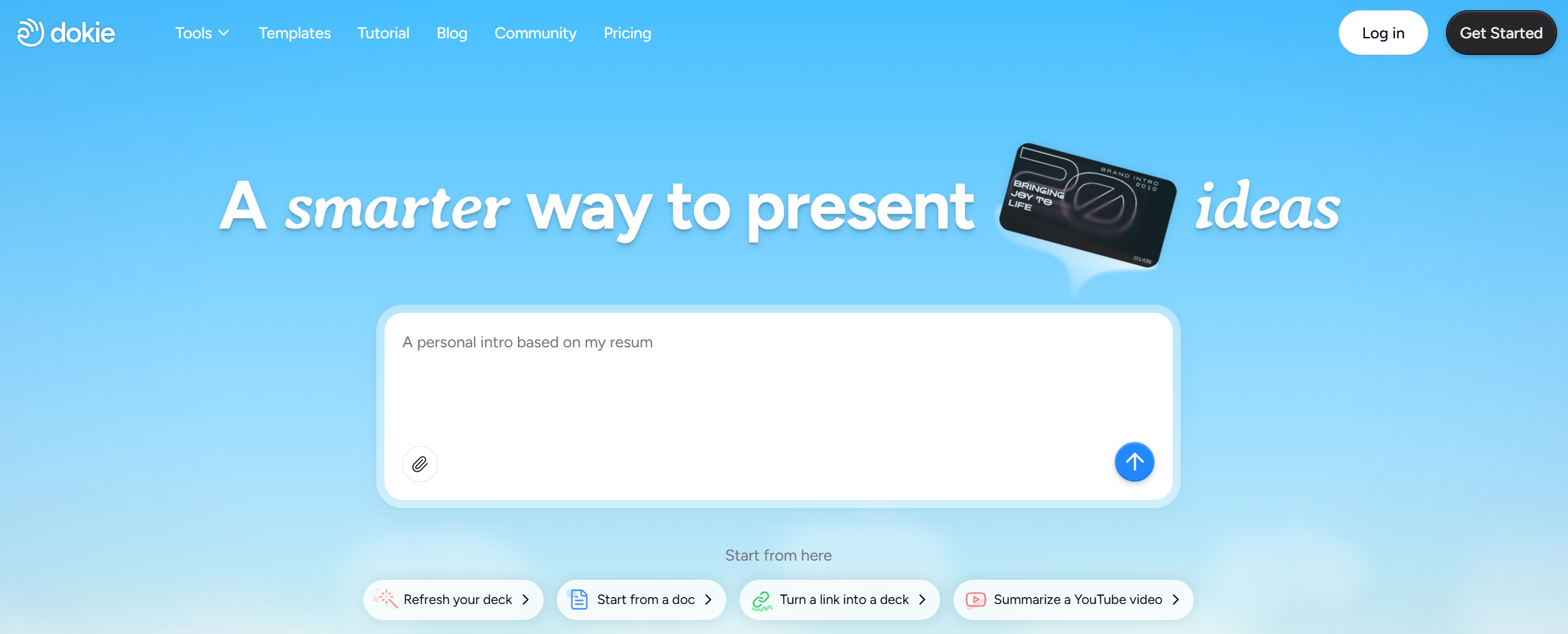
Strong communication is especially important when you need to present ideas. Whether you are preparing a business report, class presentation, project update, or training material, your message needs a clear structure.
Dokie AI can help you turn rough notes into a polished presentation. You can use it to organize your ideas, build a clear slide flow, create business-ready decks, and prepare speech drafts that match your presentation.
This is useful when you know what you want to say but need help turning it into a clear and professional format. Instead of starting from a blank slide, Dokie AI helps you create a stronger communication structure faster.
Examples of Good Communication at Work
Here are a few simple examples.
Instead of saying:
“I am still working on it.”
Say:
“I am still working on the report. The data section is finished, and I expect to complete the summary by 3 PM.”
Instead of saying:
“I do not understand.”
Say:
“Can you explain the expected result one more time? I want to make sure I follow the right direction.”
Instead of saying:
“This idea will not work.”
Say:
“I see the goal, but I am concerned about the timeline. Could we consider a smaller version first?”
Small changes like these can make your communication more professional and helpful.
FAQs About Communication Skills
1. What are the most important communication skills?
The most important communication skills include active listening, clear speaking, writing, body language, asking questions, giving feedback, and adapting your message to your audience.
2. How can I improve my communication skills quickly?
Start by improving one small habit at a time. Listen without interrupting, use simpler language, organize your ideas before speaking, and make your emails shorter and clearer.
3. Why are communication skills important at work?
Communication skills help people share ideas, solve problems, avoid confusion, and work better as a team. They are also important for meetings, presentations, leadership, and customer relationships.
4. Can communication skills be learned?
Yes. Communication skills can be learned through practice, feedback, observation, and real conversations. You do not need to be naturally outgoing to become a strong communicator.
5. How do I communicate more confidently?
Prepare your main points before speaking, practice out loud, speak slowly, and focus on helping the audience understand. Confidence usually grows with preparation and repetition.
Conclusion
Communication skills can improve every part of your work, school, and daily life. You do not need to change everything at once. Start with small habits like listening better, speaking more clearly, asking better questions, and writing shorter messages.
Over time, these habits will help you express ideas with more confidence, build stronger relationships, and work better with others.