Self Starter: Meaning, Examples, and How to Show It at Work

Employers often say they want someone who is a “self starter.” You may see this phrase in job descriptions, performance reviews, resumes, and interviews.
But what does it actually mean?
Being a self starter does not mean working alone all the time or ignoring instructions. It means you can take initiative, manage your responsibilities, and make progress without needing constant supervision.
In this guide, we will explain what self starter means, why it matters, examples of self starter behavior, and how to show this quality at work, on a resume, and in interviews.
What Does Self Starter Mean?
A self starter is a person who takes action without waiting for someone else to push them.
In the workplace, a self starter can identify what needs to be done, begin tasks independently, solve small problems, and ask for help when needed.
A self starter usually shows qualities such as:
Initiative
Ownership
Motivation
Independence
Problem-solving
Time management
Accountability
Curiosity
Confidence
Follow-through
For example, if a team process is confusing, a self starter may create a simple checklist or suggest a better workflow instead of waiting for a manager to notice the problem.
Why Being a Self Starter Is Important
Being a self starter is important because most workplaces need people who can move work forward.
Managers do not always have time to explain every detail. Teams often move quickly, priorities change, and problems appear unexpectedly. A self starter can reduce pressure on the team by taking responsibility and finding solutions.
Self starters can help organizations:
Complete work faster
Solve problems earlier
Reduce unnecessary supervision
Improve team processes
Find new opportunities
Support growth
Adapt to change
Build a stronger work culture
This skill is especially valuable in startups, remote teams, marketing, project management, sales, customer support, operations, education, and leadership roles.
Self Starter vs. Independent Worker
A self starter and an independent worker are similar, but they are not exactly the same.
An independent worker can complete tasks without much help.
A self starter goes one step further. They can identify what needs to happen, start useful work, and take ownership before being told.
For example:
An independent worker completes an assigned report on time.
A self starter notices the report is hard to read, creates a better template, and suggests using it for future updates.
Independence is about working without constant supervision. Being a self starter is about taking initiative and creating momentum.
Key Traits of a Self Starter
1. Initiative
Initiative is the core of being a self starter.
People with initiative do not wait for every instruction. They look for useful actions they can take.
For example, if a project is blocked, they may contact the right person, gather missing information, or suggest a next step.
Initiative does not mean making random decisions. It means taking thoughtful action that supports the goal.
2. Ownership
Self starters take ownership of their work.
They do not only ask, “What was I assigned?” They also ask, “What result are we trying to achieve?”
Ownership means caring about the outcome, not just completing the task.
For example, if a campaign performs poorly, someone with ownership will not simply say, “I posted the content.” They may review the results, identify possible issues, and suggest improvements.
3. Problem-Solving
Self starters are often strong problem-solvers.
They do not panic when something goes wrong. They try to understand the problem, compare possible solutions, and take action.
For example, if a customer keeps asking the same question, a self starter may suggest improving the FAQ page or creating a clearer onboarding message.
4. Time Management
A self starter needs good time management.
Taking initiative is useful only if you can still manage your main responsibilities. Self starters know how to prioritize tasks, meet deadlines, and avoid spending too much time on low-impact work.
They understand what should be done first and what can wait.
5. Curiosity
Curiosity helps self starters learn faster.
They ask questions, explore better methods, and try to understand the bigger picture.
For example, instead of only completing a data report, a curious self starter may ask what decision the report will support. This helps them make the report more useful.
6. Confidence
Self starters need confidence to begin tasks and share ideas.
This does not mean being arrogant. It means being willing to act, ask questions, and suggest improvements even when the path is not perfectly clear.
Confidence helps people move from waiting to doing.
7. Accountability
Self starters take responsibility for their actions.
If something does not work, they do not blame others immediately. They review what happened, learn from the mistake, and improve next time.
Accountability makes initiative safer because it shows maturity and reliability.
Examples of Self Starter Behavior at Work
Here are practical examples of what being a self starter looks like in the workplace.
Example 1: Improving a Process
A team spends too much time preparing weekly reports. A self starter creates a reusable report template and suggests a simpler update process.
This shows initiative, problem-solving, and ownership.
Example 2: Solving a Customer Issue
A customer support employee notices that many users ask the same question. Instead of only answering each ticket, they suggest updating the help center article.
This shows customer focus and proactive thinking.
Example 3: Starting a Project Without Being Asked
A marketing assistant notices that competitors are ranking for important keywords. They create a short competitor research summary and share content ideas with the team.
This shows curiosity and business awareness.
Example 4: Learning a New Tool
An employee sees that a new software tool could save the team time. They learn the basics, test it, and prepare a short guide for coworkers.
This shows learning ability and practical initiative.
Example 5: Preparing Before a Meeting
A team member reviews the agenda, gathers relevant data, and prepares questions before the meeting starts.
This shows preparation and responsibility.
Example 6: Taking Ownership of a Problem
A project is delayed because some details are unclear. A self starter contacts the right stakeholders, confirms missing information, and updates the timeline.
This shows leadership without needing a formal manager title.
How to Become a Self Starter
1. Understand the Bigger Goal
Before taking initiative, understand what the team is trying to achieve.
Ask yourself:
What is the goal?
Why does this task matter?
Who needs the result?
What problem are we solving?
What would success look like?
When you understand the bigger goal, your initiative becomes more useful.
2. Look for Small Problems You Can Solve
You do not need to start with a major project.
Begin by noticing small problems:
Repeated questions
Unclear documents
Slow processes
Missing templates
Confusing communication
Manual tasks
Poor file organization
Meeting follow-up gaps
Small improvements can show strong initiative.
3. Ask Better Questions
Self starters are not afraid to ask questions. They ask questions that help move work forward.
Good questions include:
“What is the priority here?”
“What result do we want from this?”
“Who should be involved?”
“What is blocking progress?”
“Would it help if I created a first draft?”
“Can I suggest a simpler way to handle this?”
Asking better questions helps you act with direction.
4. Take Action Before Everything Is Perfect
Sometimes people wait too long because they want perfect instructions.
Self starters are willing to begin with the information they have, then improve as they learn more.
For example, you can create a first draft, outline, checklist, or proposal. Even if it changes later, it gives the team something to react to.
Progress often starts with a useful first version.
5. Communicate Early
Being a self starter does not mean disappearing and working alone.
Good self starters communicate early. They tell others what they are doing, ask for feedback, and make sure they are aligned with the team.
For example:
“I noticed this process is taking a lot of time, so I created a draft checklist. Could you take a look and tell me if this direction makes sense?”
This shows initiative while still respecting team direction.
6. Follow Through
Initiative is only valuable if you finish what you start.
If you suggest an idea, take responsibility for the next step. If you begin a task, complete it or communicate clearly if something changes.
Follow-through builds trust. Without follow-through, initiative can look like random ideas without results.
7. Learn From Feedback
Self starters do not always get everything right. They may start something that needs adjustment.
The key is to accept feedback and improve.
If your manager changes your idea, do not take it personally. Use the feedback to understand priorities better next time.
How to Show You Are a Self Starter on a Resume
Instead of simply writing “self starter” in your resume skills section, show it through examples.
Weak resume example:
Self starter
Better resume examples:
Created a new reporting template that reduced weekly update time
Identified repeated customer questions and helped improve support documentation
Researched competitor content and proposed five new blog topics
Built a task tracking system to improve project follow-up
Learned a new analytics tool and shared a guide with the team
Took ownership of onboarding materials for new interns
These examples are stronger because they show action and impact.
Resume Bullet Examples for Self Starters
Here are more resume examples:
Initiated a new content calendar system to improve publishing consistency
Developed a project checklist to reduce missed deadlines
Created internal documentation for common workflow questions
Proactively analyzed campaign results and suggested optimization ideas
Took ownership of weekly team updates and improved reporting clarity
Identified process gaps and recommended improvements to the manager
Researched new tools to improve team productivity
Prepared meeting summaries and next steps without being asked
Built a portfolio project to demonstrate practical skills during job search
Supported cross-functional communication by creating clearer project notes
Use action verbs such as:
Initiated
Created
Developed
Improved
Identified
Launched
Built
Organized
Proposed
Researched
Led
Streamlined
Implemented
How to Talk About Being a Self Starter in an Interview
In interviews, use a real example. Do not only say, “I am a self starter.”
A strong answer should include:
The situation
The problem or opportunity
What you did without being asked
The result
What you learned
Example answer:
“In my previous role, I noticed that our weekly campaign updates were inconsistent. Some reports included results, while others only listed tasks. I created a simple reporting template with sections for goals, results, blockers, and next steps. After sharing it with my manager, the team started using it for weekly updates. It made the reports easier to read and helped everyone understand campaign progress faster.”
This answer shows initiative, communication, and practical impact.
Self Starter Interview Questions
Employers may ask questions that test whether you are a self starter.
Common questions include:
Tell me about a time you took initiative.
Describe a project you started without being asked.
How do you handle unclear instructions?
Tell me about a time you solved a problem independently.
How do you stay productive without close supervision?
What do you do when you finish your assigned work early?
Can you give an example of improving a process?
Prepare examples before the interview so your answers sound clear and specific.
Self Starter Answer Example
Question:
“Can you give an example of a time you took initiative?”
Answer:
“Yes. In my last role, I noticed that new team members often asked the same questions during onboarding. The information existed, but it was spread across different documents. I created a simple onboarding checklist and organized the key links in one place. I shared it with my manager, and after a few edits, we started using it for new hires. It saved time and made onboarding easier.”
This answer works because it shows a real problem, independent action, and a useful result.
Self Starter Skills for Different Roles
For Marketing Roles
A self starter in marketing may:
Research competitors
Suggest campaign ideas
Analyze performance data
Create content outlines
Test new channels
Improve reporting templates
Track trends
Propose better messaging
For Customer Support Roles
A self starter in customer support may:
Identify repeated user issues
Suggest help center updates
Create response templates
Escalate serious problems early
Improve ticket organization
Share customer insights with product teams
For Project Management Roles
A self starter in project management may:
Create timelines
Clarify ownership
Follow up on blockers
Improve meeting notes
Build tracking systems
Identify risks early
Communicate next steps clearly
For Teaching Roles
A self starter in teaching may:
Create new classroom materials
Improve lesson plans
Prepare extra student resources
Test new education tools
Organize classroom activities
Help students before problems become serious
For Sales Roles
A self starter in sales may:
Research leads
Prepare outreach templates
Follow up consistently
Track objections
Improve pitch materials
Suggest new customer segments
Create sales notes for the team
For Students
A student can show self starter behavior by:
Starting a group project plan
Creating a study schedule
Building a portfolio
Asking for feedback
Joining competitions
Learning new tools
Organizing class materials
Volunteering for presentation roles
Self Starter vs. Team Player
Some people think being a self starter means working alone. That is not true.
A strong self starter can also be a strong team player.
A self starter takes initiative.
A team player communicates and collaborates.
The best employees do both. They can act independently, but they also keep the team informed and aligned.
For example, a self starter may create a draft project plan, then ask teammates for input before finalizing it. This combines ownership with collaboration.
Common Mistakes Self Starters Should Avoid
One common mistake is acting without understanding the goal. Initiative is useful only when it supports the right outcome.
Another mistake is doing too much without communicating. If you work independently for too long without alignment, you may waste time on the wrong direction.
A third mistake is taking over other people’s responsibilities. Being proactive should not mean ignoring roles or creating confusion.
A fourth mistake is starting many ideas but finishing none. Follow-through is essential.
A final mistake is avoiding feedback. Self starters should be open to correction and improvement.
Use Dokie AI to Present Your Initiative Clearly
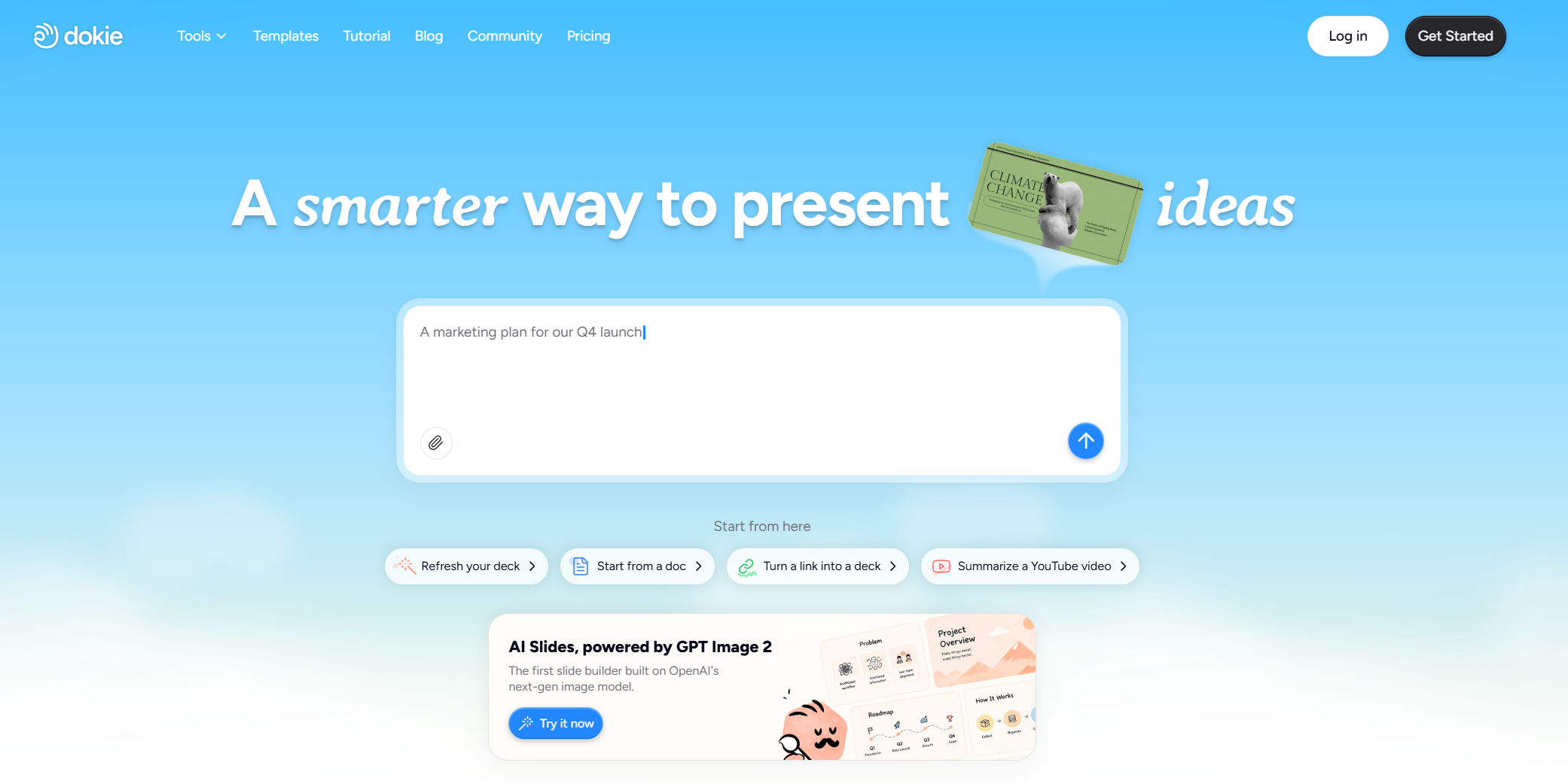
Being a self starter often means turning ideas into clear action. You may need to present a project proposal, share a process improvement, prepare a portfolio, explain a case study, or summarize your achievements during an interview.
An AI slides generator can help you turn rough notes, project ideas, and work examples into a structured presentation. You can use it to create career portfolio decks, interview presentations, project update slides, internal proposal decks, and professional development presentations.
Instead of starting from a blank slide, Dokie AI helps organize your ideas into a clear slide flow. This makes it easier to communicate your initiative, show your results, and present your value professionally.
Self Starter Checklist
Use this checklist to build self starter habits:
Do I understand the goal?
Can I identify what needs to be done next?
Am I solving a real problem?
Have I gathered enough information to start?
Do I know when to ask for help?
Have I communicated my plan clearly?
Am I focusing on useful work, not random activity?
Can I finish what I start?
Am I open to feedback?
Can I show the result of my initiative?
If you can answer yes to most of these questions, you are building strong self starter behavior.
FAQs About Self Starters
1. What does self starter mean?
A self starter is someone who takes initiative and begins useful work without needing constant direction. In the workplace, it means being proactive, responsible, and able to move tasks forward independently.
2. Is being a self starter a skill?
Yes. Being a self starter is a professional skill that includes initiative, ownership, problem-solving, time management, and accountability.
3. How do you show you are a self starter?
Show that you are a self starter by giving examples of times you identified a problem, started a project, improved a process, learned a new skill, or helped the team without being asked.
4. What is an example of a self starter?
An example of a self starter is an employee who notices that team reports are confusing, creates a clearer report template, gets feedback from the manager, and helps the team use it.
5. How do I say self starter on a resume?
Instead of only writing “self starter,” use action-based examples. For example: “Created a new project tracking system to improve deadline visibility across the team.”
6. Why do employers want self starters?
Employers want self starters because they reduce the need for constant supervision, solve problems earlier, improve processes, and help teams move faster.
7. Can a self starter work well in a team?
Yes. A good self starter can also be a strong team player. The key is to take initiative while still communicating clearly and staying aligned with team goals.
Conclusion
A self starter is someone who takes initiative, solves problems, and moves work forward without waiting for constant direction. This skill is valuable because it shows ownership, motivation, and reliability.
To become a stronger self starter, understand the bigger goal, look for problems you can solve, ask smart questions, communicate early, and follow through on your ideas. Over time, these habits can help you stand out at work, in interviews, and throughout your career.