30 Phone Interview Tips to Help You Make a Strong First Impression

Phone interviews may feel easier than in-person interviews, but they are still important. Many companies use phone interviews to decide whether a candidate should move to the next round.
During a phone interview, the employer may ask about your background, skills, experience, salary expectations, availability, and interest in the role. Your goal is to sound prepared, professional, and easy to communicate with.
In this guide, you will learn 30 phone interview tips to help you prepare, answer questions better, and make a strong first impression.
What Is a Phone Interview?
A phone interview is an interview conducted over the phone instead of in person or by video.
It is often used as an early screening step. Recruiters and hiring managers use phone interviews to learn more about candidates before inviting them to a longer interview.
A phone interview may last 15 to 45 minutes, depending on the role and company. Some phone interviews are simple screening calls, while others include detailed questions about your experience and skills.
Why Phone Interviews Matter
Phone interviews matter because they can decide whether you move forward in the hiring process.
Even if the call feels casual, the interviewer is evaluating your communication skills, professionalism, interest in the role, and basic qualifications.
A strong phone interview can help you:
Make a positive first impression
Show that you are prepared
Explain your experience clearly
Confirm your interest in the role
Build trust with the recruiter
Move to the next interview round
Because the interviewer cannot see you, your voice, tone, and answers become especially important.
1. Research the Company Before the Call
Before the interview, spend time learning about the company.
Look at the company website, product pages, recent news, social media, and job description. Try to understand what the company does, who its customers are, and what the role may involve.
You do not need to memorize everything. But you should be able to answer basic questions like:
What does the company do?
Why are you interested in this company?
How does this role match your background?
A little research can make your answers sound much more specific.
2. Review the Job Description Carefully
The job description is your best guide for preparation.
Read it several times and highlight the most important skills, responsibilities, and requirements. Then think about examples from your experience that match those points.
For example, if the job mentions communication, project coordination, and reporting, prepare examples that show those skills.
This helps you avoid giving random answers. Instead, you can connect your background directly to the job.
3. Prepare Your Resume Summary
Most phone interviews begin with a question like:
“Can you tell me about yourself?”
Prepare a short professional summary before the call.
A good answer should include:
Your current or most recent role
Your key experience
Your strongest skills
Why you are interested in this opportunity
Example:
“I have three years of experience in content marketing, including SEO writing, campaign planning, and performance tracking. In my last role, I worked on blog strategy and product content for a SaaS company. I am interested in this role because it combines content, growth, and clear communication, which are areas I enjoy and want to keep developing.”
Keep it short. One to two minutes is enough.
4. Keep Your Resume Nearby
One advantage of phone interviews is that you can keep notes in front of you.
Print your resume or open it on your computer before the call. This helps you quickly remember dates, job titles, project details, and achievements.
However, do not read your resume word for word. Use it as a reference, not a script.
The goal is to sound natural, not robotic.
5. Prepare Answers to Common Phone Interview Questions
Many phone interviews include similar questions.
Prepare answers for questions like:
Tell me about yourself.
Why are you interested in this role?
Why are you leaving your current job?
What are your strengths?
What are your salary expectations?
When can you start?
What experience do you have with this type of work?
Do you have any questions for us?
You do not need to memorize full answers. Instead, prepare key points so you can answer smoothly.
6. Choose a Quiet Place
Find a quiet place where you will not be interrupted.
Avoid taking the call in a noisy café, crowded office, car, or public area. Background noise can make it difficult for the interviewer to hear you and may make you sound less prepared.
If you live with other people, let them know your interview time in advance.
A quiet environment helps you focus and sound professional.
7. Check Your Phone Battery and Signal
Before the interview, make sure your phone is charged and your signal is strong.
If possible, use a location with stable service. You do not want the call to drop during an important answer.
If you use headphones, test them before the call. Make sure the microphone works clearly.
Technical problems can happen, but checking early reduces the risk.
8. Be Ready 10 Minutes Early
Do not wait until the last minute to prepare.
Be ready at least 10 minutes before the scheduled time. Sit down, review your notes, check your phone, and take a few deep breaths.
Being early helps you feel calmer when the call begins.
If the interviewer calls a few minutes early, you will already be prepared.
9. Answer the Phone Professionally
Your first words set the tone for the interview.
Instead of saying only “Hello?” try:
“Hello, this is Alex speaking.”
This sounds clear and professional.
If the call comes from an unknown number, still answer politely. It may be the recruiter or hiring manager.
10. Smile While Speaking
Even though the interviewer cannot see you, smiling can change your voice.
When you smile, your tone often sounds warmer and more confident. This can make the conversation feel more positive.
You do not need to force it the whole time. But smiling during your introduction and key answers can help you sound more engaged.
11. Speak Clearly and Slowly
On the phone, it is easier for words to be missed. Speak clearly and avoid rushing.
If you speak too fast, the interviewer may struggle to follow your answer. If you speak too quietly, you may sound unsure.
Try to speak at a steady pace. Pause briefly between key points.
Clear speaking shows confidence and strong communication skills.
12. Use a Professional Tone
A phone interview should sound friendly but professional.
Avoid sounding too casual, even if the interviewer is relaxed. Do not use too much slang. Avoid filler words when possible, such as “like,” “you know,” or “basically.”
You can still sound natural. The goal is not to sound formal in a fake way. The goal is to sound respectful, focused, and prepared.
13. Listen Carefully Before Answering
Do not interrupt the interviewer.
Listen to the full question before answering. If the question is unclear, ask for clarification.
You can say:
“Could you clarify what you mean by that?”
“Do you mean my experience with the tool, or my experience managing that type of project?”
Good listening is especially important in phone interviews because you cannot rely on facial expressions or body language.
14. Take Short Notes During the Call
Keep a notebook nearby and write down key points during the interview.
You can note:
The interviewer’s name
Important job details
Next steps
Questions you want to ask
Topics to mention later
Salary or timeline information
Taking notes helps you stay organized and makes your follow-up message stronger.
Just avoid typing loudly, because the interviewer may hear it.
15. Use the STAR Method for Behavioral Questions
For questions about past experience, use the STAR method.
STAR means:
Situation
Task
Action
Result
For example, if the interviewer asks about a time you solved a problem, you can answer like this:
“In my last role, our weekly report process was taking too long. I was responsible for helping the team improve it. I created a simple template and added a checklist for data updates. As a result, the team reduced reporting time and made fewer mistakes.”
This structure keeps your answer clear and easy to follow.
16. Keep Answers Focused
Phone interview answers should be clear and not too long.
A good answer is usually 30 to 90 seconds. If the question is complex, you can take a little longer, but avoid talking for several minutes without pause.
If you are not sure whether to add more detail, you can say:
“I can share more detail if helpful.”
This shows that you respect the interviewer’s time.
17. Prepare Specific Examples
General answers are less convincing than specific examples.
Instead of saying:
“I am good at communication.”
Say:
“In my last role, I prepared weekly project updates for the team and made sure each update included progress, blockers, and next steps.”
Specific examples help the interviewer understand what you can actually do.
18. Show Interest in the Role
Employers want to hire people who are genuinely interested.
During the call, show that you understand the role and care about the opportunity.
You can say:
“That part of the role is especially interesting to me because…”
“I have worked on similar projects before, and I would be excited to apply that experience here.”
“This sounds closely connected to the type of work I want to keep growing in.”
Interest should sound natural and specific.
19. Be Honest About Your Experience
Do not exaggerate your skills.
If you do not have experience with a tool or task, be honest, but show that you can learn.
Example:
“I have not used that exact platform before, but I have used similar tools like Asana and Trello. I am comfortable learning new systems quickly.”
This is better than pretending to know something and getting caught later.
20. Prepare Your Salary Expectations
Many phone interviews include salary questions.
Before the call, research the market range for the role. Decide your ideal range and your minimum acceptable range.
A simple answer can be:
“Based on the role and my experience, I am looking for a range of X to Y. I am also open to discussing the full compensation package and role expectations.”
If you are not ready to give a number, you can ask:
“Could you share the budgeted range for this role?”
Be polite and professional.
21. Avoid Negative Comments About Past Employers
If asked why you are leaving your current or past job, stay professional.
Do not complain about your boss, coworkers, company culture, or salary too aggressively.
A better answer is:
“I learned a lot in my current role, but I am looking for a new opportunity where I can take on more responsibility and grow in a direction that matches my long-term goals.”
This keeps the focus positive.
22. Have Questions Ready
At the end of the phone interview, the interviewer will often ask:
“Do you have any questions for me?”
Always prepare a few questions.
Good questions include:
What are the main goals for this role in the first three months?
What does success look like in this position?
What are the biggest challenges the team is facing right now?
How is the team currently structured?
What are the next steps in the interview process?
Asking thoughtful questions shows interest and preparation.
23. Do Not Multitask
During the phone interview, focus only on the call.
Do not check email, browse websites, eat, text, or walk around too much. The interviewer may hear distractions in your voice or background.
Even though they cannot see you, they can often tell when you are not fully focused.
Treat the phone interview like a real meeting.
24. Use Notes, But Do Not Read Scripts
Notes are helpful, but reading from a script can make you sound stiff.
Prepare bullet points instead of full paragraphs.
For example, write:
Campaign planning
SEO articles
Weekly reporting
Improved traffic by 30%
This gives you reminders while still allowing you to speak naturally.
25. Stand or Sit Up Straight
Your posture affects your voice.
If you lie down or sit in a relaxed position, you may sound less energetic. Sitting or standing up straight can help you sound more confident.
Some people prefer standing during phone interviews because it gives their voice more energy.
Choose the position that helps you sound focused and alert.
26. Confirm the Next Steps
Before the call ends, make sure you understand what happens next.
You can ask:
“What are the next steps in the process?”
“When should I expect to hear back?”
“Is there anything else you need from me?”
This shows professionalism and helps you know what to expect.
27. Thank the Interviewer
Always thank the interviewer before ending the call.
Example:
“Thank you for taking the time to speak with me today. I enjoyed learning more about the role and the team.”
This is simple, polite, and professional.
A good closing can leave a positive final impression.
28. Send a Follow-Up Email
After the phone interview, send a short thank-you email.
Try to send it within 24 hours.
Example:
Subject: Thank You
Hi [Name],
Thank you for taking the time to speak with me today. I enjoyed learning more about the [Job Title] role and the team’s goals.
I am especially interested in the opportunity to contribute to [specific area discussed]. Based on our conversation, I believe my experience in [relevant skill or experience] could be a strong fit.
Thank you again, and I look forward to the next steps.
Best regards,
[Your Name]
A follow-up email shows professionalism and keeps you fresh in the interviewer’s mind.
29. Review Your Performance After the Call
After the interview, take a few minutes to review how it went.
Ask yourself:
Which answers went well?
Which questions were difficult?
Did I speak clearly?
Did I show enough interest?
What should I improve next time?
This helps you prepare better for future interviews.
Every interview is also practice.
30. Prepare for the Next Round
If the phone interview goes well, the next step may be a video interview, technical test, case study, or final interview.
Use your phone interview notes to prepare.
Review:
What the interviewer cared about
What skills were mentioned most
What challenges the role may involve
What examples you should prepare next
What questions you still have
The phone interview is only the beginning. Use it to understand how to perform better in the next round.
Common Phone Interview Questions
Here are common phone interview questions you should prepare for:
Tell me about yourself.
Why are you interested in this role?
What do you know about our company?
Why are you leaving your current job?
What are your strengths?
What is your biggest weakness?
What are your salary expectations?
When can you start?
Can you describe your experience with this type of work?
Do you have any questions for me?
Prepare short and specific answers for each one.
Phone Interview Mistakes to Avoid
One common mistake is treating the phone interview too casually. Even if it is only a short call, it is still part of the hiring process.
Another mistake is answering in a noisy place. Background noise can make you sound unprepared.
A third mistake is giving answers that are too long. Phone interviews need clear and focused communication.
A fourth mistake is not asking questions. This can make you seem uninterested.
A final mistake is forgetting to follow up. A short thank-you email can help reinforce your interest.
Use Dokie AI to Prepare Interview Presentations
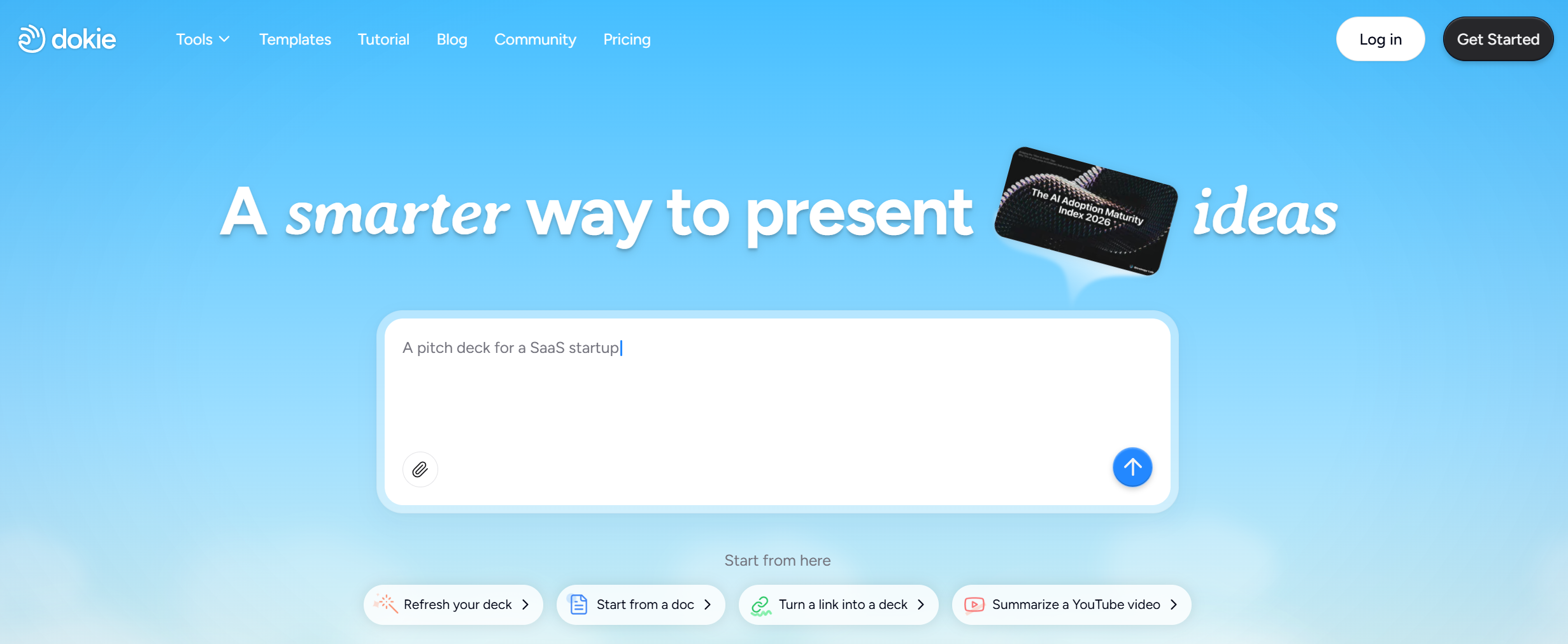
A phone interview is often the first step, but later interview rounds may require more detailed preparation. You may need to present a case study, explain your portfolio, prepare a project plan, or summarize your experience visually.
Dokie AI can help you turn your resume, project notes, and achievements into a clear presentation. You can use it to create interview decks, portfolio presentations, career summary slides, and case study presentations.
Instead of starting from a blank slide, Dokie AI helps organize your ideas into a professional structure. This makes it easier to communicate your value and prepare for important interview rounds.
Phone Interview Checklist
Before the interview, check these points:
Research the company
Review the job description
Prepare your resume summary
Keep your resume nearby
Prepare common interview answers
Choose a quiet place
Check your phone battery
Test your headphones
Prepare salary expectations
Write down questions to ask
Be ready 10 minutes early
Send a follow-up email after the call
This simple checklist can help you feel more confident and prepared.
FAQs About Phone Interviews
1. How long does a phone interview usually last?
A phone interview usually lasts 15 to 45 minutes. A recruiter screening call may be shorter, while a hiring manager interview may take longer.
2. What should I say at the start of a phone interview?
Start with a professional greeting, such as “Hello, this is [Your Name] speaking.” Then follow the interviewer’s lead.
3. Can I use notes during a phone interview?
Yes. You can keep your resume, job description, and key notes nearby. Just avoid reading full answers word for word.
4. How do I sound confident on a phone interview?
Speak clearly, slow down, sit or stand up straight, prepare examples, and smile while speaking. Confidence comes from preparation and practice.
5. What should I ask at the end of a phone interview?
Ask about the role’s goals, team structure, success expectations, challenges, and next steps in the interview process.
6. Should I send a thank-you email after a phone interview?
Yes. Sending a short thank-you email within 24 hours is a professional way to show interest and leave a positive impression.
7. What should I avoid during a phone interview?
Avoid noisy places, multitasking, interrupting, speaking too fast, giving overly long answers, criticizing past employers, and sounding unprepared.
Conclusion
A phone interview is your chance to make a strong first impression before the company invites you to the next round. Preparation matters.
Research the company, review the job description, prepare clear answers, choose a quiet place, and speak with confidence. After the call, follow up professionally and use what you learned to prepare for the next step.
With the right preparation, a phone interview can become a strong starting point for your job opportunity.