How to Write a Cover Letter: Simple Steps, Examples, and Tips
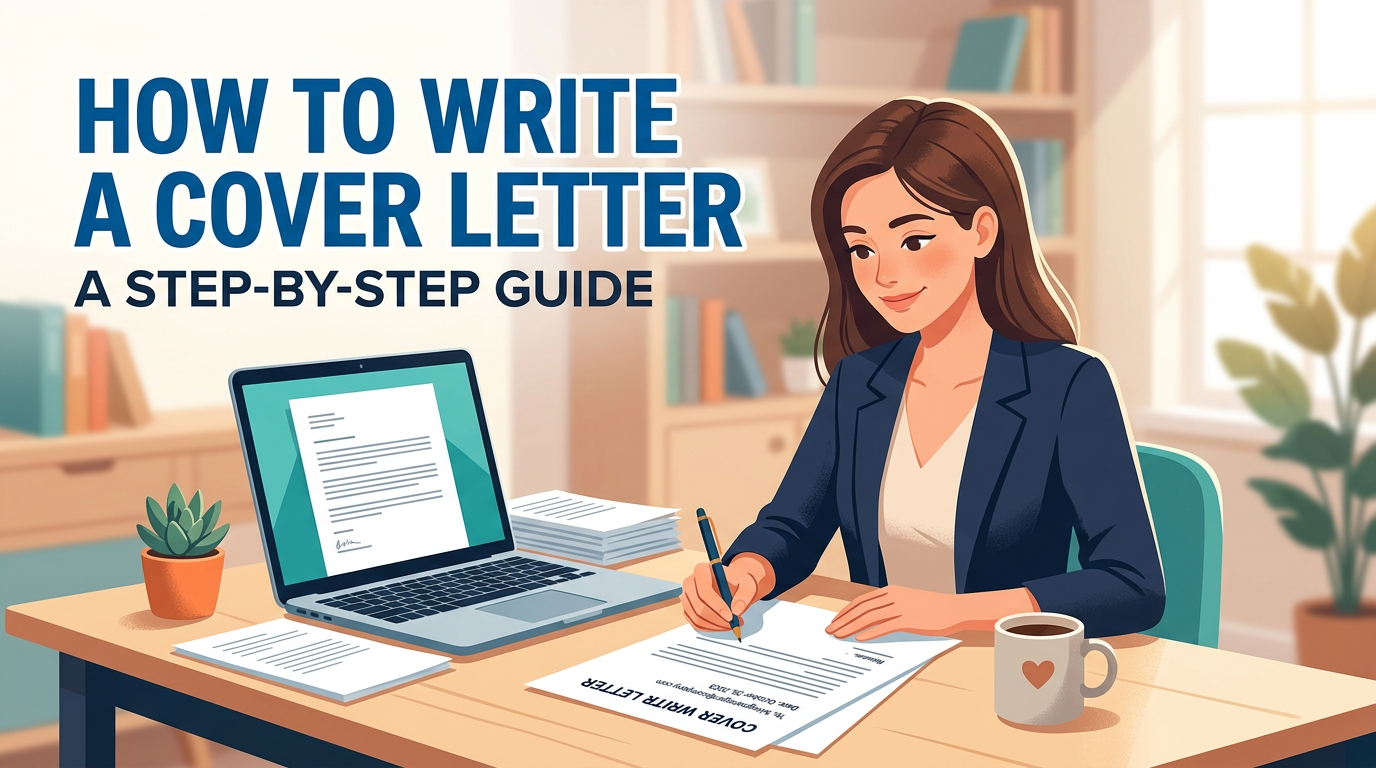
A cover letter can help you stand out when applying for a job. While your resume lists your experience, your cover letter explains why that experience matters.
A good cover letter does not need to be long or complicated. It should show that you understand the role, explain your value, and give the hiring manager a reason to read your resume more carefully.
In this guide, you will learn how to write a cover letter step by step, what to include, what to avoid, and how to make your letter sound professional.
What Is a Cover Letter?
A cover letter is a one-page document sent with your resume when applying for a job.
It introduces you to the employer and explains why you are interested in the role. It also gives you a chance to highlight your best skills, experience, and achievements.
A cover letter should not repeat your full resume. Instead, it should connect your background to the job you want.
For example, your resume may say:
“Managed email marketing campaigns.”
Your cover letter can explain:
“In my previous role, I managed email campaigns that improved user engagement and supported product sign-ups. This experience matches your need for someone who can plan, write, and optimize customer communication.”
Why Is a Cover Letter Important?
A cover letter helps employers understand your motivation and fit.
Many candidates have similar resumes. A cover letter gives you a chance to show your personality, communication style, and understanding of the company.
A strong cover letter can help you:
Explain why you want the job
Highlight your most relevant experience
Show your writing and communication skills
Connect your past work to the company’s needs
Explain career changes or employment gaps
Stand out from other applicants
Not every employer reads cover letters carefully, but when they do, a strong one can make a real difference.
How Long Should a Cover Letter Be?
A cover letter should usually be around 250 to 400 words.
It should fit on one page. Most cover letters have 3 to 5 short paragraphs.
Avoid writing a long personal story. Hiring managers are busy, so your letter should be easy to scan and focused on the role.
A good structure is:
Opening paragraph
Why you are a good fit
Key achievement or example
Why you are interested in the company
Closing paragraph
How to Write a Cover Letter Step by Step
Step 1: Start With the Right Header
At the top of your cover letter, include your contact information.
You can include:
Your name
Email address
Phone number
LinkedIn profile
City and state
Date
Company name
Hiring manager name, if available
Example:
Alex Johnson
alex@email.com
New York, NY
May 20, 2026
Hiring Manager
ABC Company
If you are submitting the cover letter through an online form, you may not need a formal header. But if you are uploading a PDF or sending it by email, a clean header looks more professional.
Step 2: Use a Professional Greeting
If you know the hiring manager’s name, use it.
Examples:
Dear Ms. Smith,
Dear Mr. Johnson,
Dear Taylor Lee,
If you do not know the name, use a simple professional greeting.
Examples:
Dear Hiring Manager,
Dear Recruiting Team,
Dear Marketing Team,
Avoid old-fashioned greetings like “To Whom It May Concern” if possible. It sounds less personal.
Step 3: Write a Strong Opening Paragraph
Your opening paragraph should quickly explain who you are, what role you are applying for, and why you are interested.
Do not start with a generic sentence like:
“I am writing to apply for the position.”
That is acceptable, but not very strong.
A better opening is specific and relevant.
Example:
“I am excited to apply for the Marketing Coordinator role at BrightLabs. With experience in content planning, campaign tracking, and social media management, I am interested in helping your team create clear marketing campaigns that support user growth.”
This opening works because it mentions the role, the company, and relevant skills.
Step 4: Match Your Experience to the Job
The main part of your cover letter should explain why you are a good fit.
Read the job description carefully. Look for the most important skills and responsibilities. Then choose 2 or 3 experiences that match those needs.
For example, if the job description mentions project management, writing, and data analysis, your cover letter should show experience in those areas.
Example:
“In my previous role, I managed weekly content calendars, coordinated with designers, and tracked campaign performance. This helped our team publish content on time and improve engagement across multiple channels.”
This is better than saying:
“I am a hard worker with strong communication skills.”
Specific examples are more convincing than general claims.
Step 5: Include One Clear Achievement
A strong cover letter should include at least one achievement.
Whenever possible, use numbers.
Examples:
Increased website traffic by 35%
Managed 20+ client projects
Improved email open rates by 18%
Supported a campaign that generated 500 leads
Created training materials for 100 employees
Reduced reporting time by 30%
If you do not have exact numbers, use a clear result.
Example:
“I helped create a new onboarding guide that made it easier for new team members to understand the process.”
Achievements show that you did more than complete tasks. They show that your work created value.
Step 6: Explain Why You Want This Company
Employers want to know that you are not sending the same letter to every company.
Add a short sentence about why you are interested in this company or role.
You can mention:
The company’s product
The company’s mission
The team’s work
The industry
The role’s responsibilities
A recent company project
Your connection to the problem they solve
Example:
“I am especially interested in this role because your company focuses on making workplace tools easier for small teams. I enjoy working on products that help people save time and communicate more clearly.”
Keep this part natural. Do not overpraise the company or sound fake.
Step 7: End With a Clear Closing
Your closing paragraph should be polite and confident.
Thank the employer for their time and express interest in the next step.
Example:
“Thank you for considering my application. I would be excited to discuss how my experience in content planning and campaign execution can support your team. I look forward to the opportunity to speak with you.”
Then end with:
Sincerely,
Your Name
Other professional closings include:
Best regards,
Kind regards,
Thank you,
Cover Letter Format
Here is a simple cover letter format you can follow.
Your Name
Email Address
Phone Number
City, State
Date
Dear Hiring Manager,
Opening paragraph: Introduce yourself, mention the role, and explain why you are interested.
Second paragraph: Connect your experience to the job requirements. Mention your most relevant skills.
Third paragraph: Give a specific achievement or example that shows your value.
Fourth paragraph: Explain why you are interested in the company and close with a professional call to action.
Sincerely,
Your Name
Cover Letter Template
Here is a simple template you can edit.
Dear Hiring Manager,
I am excited to apply for the [Job Title] role at [Company Name]. With experience in [Skill 1], [Skill 2], and [Skill 3], I am interested in contributing to your team and supporting [Company Goal or Role Responsibility].
In my previous role at [Previous Company], I worked on [Relevant Task or Project]. This helped me build strong experience in [Relevant Skill] and gave me a clear understanding of how to [Job-Related Outcome].
One achievement I am especially proud of is [Specific Achievement]. Through this project, I was able to [Result or Impact]. I believe this experience matches the needs of your team and would help me succeed in this role.
I am interested in [Company Name] because [Reason You Like the Company or Role]. Thank you for considering my application. I would welcome the opportunity to discuss how my background can support your team.
Sincerely,
[Your Name]
Cover Letter Example for a Marketing Role
Dear Hiring Manager,
I am excited to apply for the Marketing Assistant role at GreenWave. With experience in content planning, social media management, and campaign reporting, I am interested in helping your team create clear and effective marketing content.
In my previous internship, I supported weekly content calendars, wrote social media captions, and helped track campaign performance. I worked closely with designers and marketing managers to make sure content was published on time and matched the campaign goals.
One project I am proud of was a product awareness campaign where I helped write posts and organize performance data. The campaign improved engagement and gave the team better insight into which messages worked best with our audience.
I am interested in GreenWave because your company creates practical tools for sustainable living. I would be excited to bring my writing, organization, and research skills to your team. Thank you for considering my application. I look forward to the opportunity to speak with you.
Sincerely,
Alex Johnson
Cover Letter Example for a Student or Recent Graduate
Dear Hiring Manager,
I am excited to apply for the Junior Project Coordinator role at BrightPath. As a recent graduate with experience in group projects, research presentations, and event planning, I am interested in building my career in project coordination.
During college, I worked on several team projects that required planning, communication, and deadline management. In one project, I helped organize the timeline, assign tasks, and prepare the final presentation. This experience helped me develop strong communication and organizational skills.
I also completed an internship where I supported basic research, meeting notes, and project updates. This taught me how to work in a professional setting and communicate progress clearly with a team.
I am interested in BrightPath because your team works on practical business solutions for growing companies. Thank you for considering my application. I would be excited to discuss how my skills and motivation can support your team.
Sincerely,
Jamie Lee
Cover Letter Example for a Career Change
Dear Hiring Manager,
I am excited to apply for the Customer Success Associate role at CloudDesk. Although my background is in teaching, I have strong experience in communication, problem-solving, and helping people understand complex information.
As a teacher, I worked with students, parents, and colleagues every day. I learned how to listen carefully, explain ideas clearly, manage difficult conversations, and adjust my communication style based on different needs. These skills are directly connected to customer success.
In my previous role, I also created learning materials, tracked student progress, and helped improve classroom processes. This experience taught me how to support people over time, identify problems early, and guide users toward better outcomes.
I am interested in CloudDesk because your product helps teams work more efficiently. I would be excited to bring my communication skills and service mindset to your customer success team. Thank you for your time and consideration.
Sincerely,
Morgan Smith
Cover Letter Example for an Internship
Dear Hiring Manager,
I am excited to apply for the Content Marketing Internship at NovaTech. I am currently studying communications and have a strong interest in writing, social media, and digital marketing.
Through my coursework, I have created blog outlines, social media content, and short research presentations. I also helped manage content for a student club, where I wrote event posts and supported online promotion.
This internship interests me because I want to learn how marketing works in a real business environment. I am especially interested in content strategy and how companies use clear messaging to attract users.
Thank you for considering my application. I would be grateful for the opportunity to learn from your team and contribute with my writing, research, and organization skills.
Sincerely,
Taylor Kim
Common Cover Letter Mistakes to Avoid
One common mistake is writing a letter that is too generic. If your cover letter could be sent to any company, it is probably not specific enough.
Another mistake is repeating your resume word for word. Your cover letter should explain your most relevant experience, not list everything again.
A third mistake is making the letter too long. A cover letter should be short and focused.
A fourth mistake is only talking about what you want. Employers also want to know what you can contribute.
A final mistake is not proofreading. Spelling or grammar mistakes can make your application look rushed.
Tips for Writing a Better Cover Letter
Use the job description as your guide. The best cover letters match the company’s needs.
Start with the most relevant information. Do not wait until the last paragraph to explain why you are a good fit.
Use simple and professional language. You do not need big words or complicated sentences.
Show results when possible. Numbers and examples make your letter stronger.
Keep the tone confident but not arrogant. You want to sound capable, respectful, and interested.
Customize each letter. Even small changes can make your cover letter feel more personal.
How to Write a Cover Letter With No Experience
If you do not have much work experience, focus on transferable skills.
Transferable skills are skills you can use in many roles, such as:
Communication
Organization
Research
Writing
Teamwork
Problem-solving
Time management
Presentation skills
Customer service
Attention to detail
You can also mention school projects, volunteer work, internships, part-time jobs, personal projects, or club experience.
Example:
“Although I am early in my career, I have developed strong research and communication skills through class projects and volunteer work. I am confident that these skills can help me support your team and learn quickly in this role.”
How to Write a Cover Letter for a Career Change
If you are changing careers, explain how your past experience connects to the new role.
Do not focus too much on what you lack. Focus on skills that transfer.
For example, a teacher moving into customer success can highlight communication, training, patience, and problem-solving.
A salesperson moving into marketing can highlight customer understanding, messaging, and persuasion.
A project coordinator moving into operations can highlight planning, process improvement, and cross-team communication.
Your goal is to help the employer understand why your background still makes sense.
Use Dokie AI to Create Career and Interview Presentations
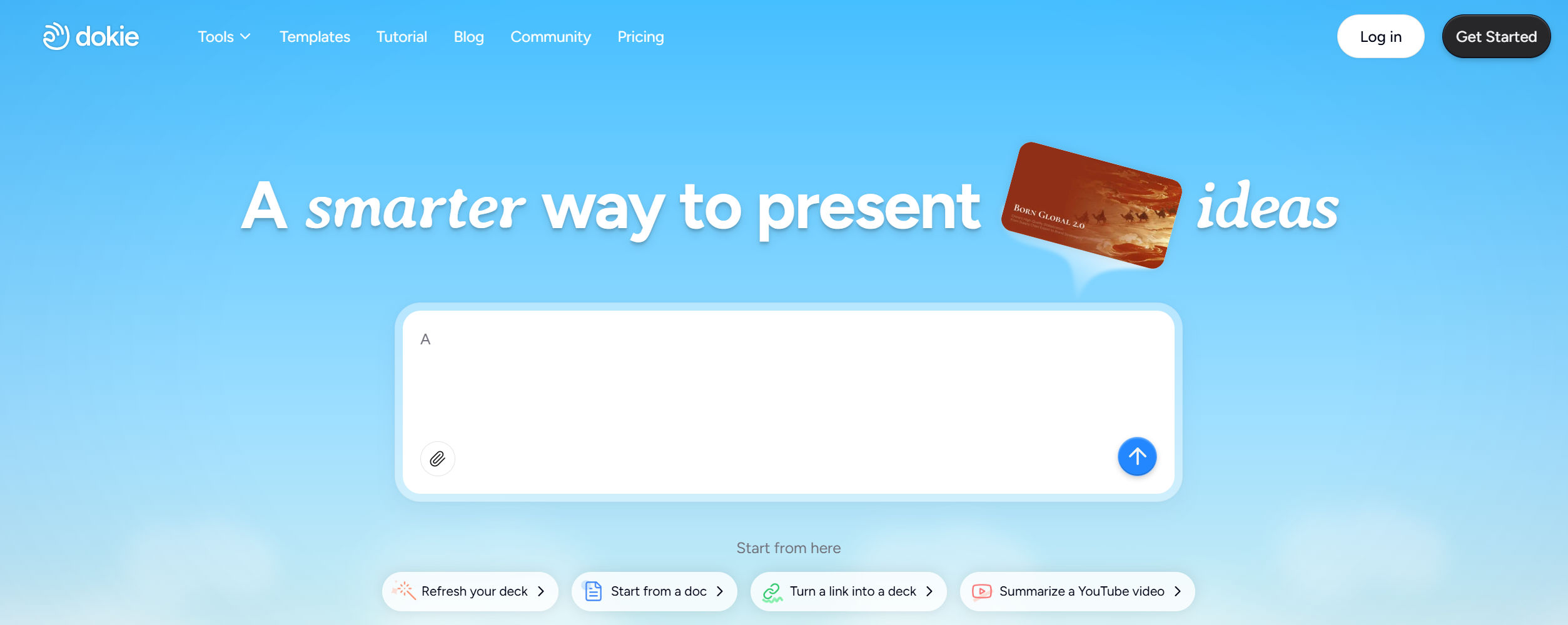
A cover letter helps you introduce yourself in writing, but some job opportunities may also require a presentation. You may need to present a portfolio, a case study, a project plan, or a final-round interview deck.
Dokie AI can help you turn your work experience, achievements, and project notes into a clear presentation. You can use it to create interview presentations, work portfolio decks, career summary slides, and case study presentations.
Instead of starting from a blank slide, Dokie AI helps organize your ideas into a professional structure. This can make it easier to explain your experience clearly and show your value with confidence.
Cover Letter Checklist
Before sending your cover letter, check these points:
Did you mention the correct job title?
Did you include the company name?
Is your opening paragraph clear?
Did you connect your experience to the job?
Did you include at least one example or achievement?
Is the letter under one page?
Is the tone professional?
Did you proofread for mistakes?
Is your contact information correct?
Does the letter make you sound like a strong fit?
If the answer is yes, your cover letter is ready to send.
FAQs About Cover Letters
1. What should a cover letter include?
A cover letter should include a greeting, an opening paragraph, relevant experience, one or two key achievements, a reason you are interested in the company, and a professional closing.
2. How long should a cover letter be?
A cover letter should usually be 250 to 400 words. It should fit on one page and be easy to read.
3. Do I need a cover letter for every job?
Not every job requires a cover letter, but sending one can help when you want to explain your fit, show interest, or stand out from other applicants.
4. How do I start a cover letter?
Start by mentioning the role you are applying for and why you are interested. Try to include one or two relevant skills in the opening paragraph.
5. How do I end a cover letter?
End by thanking the employer and expressing interest in an interview or further conversation. Keep the closing polite and professional.
6. Should I use the same cover letter for every job?
No. You can use the same basic structure, but you should customize each cover letter for the job, company, and required skills.
7. What if I do not know the hiring manager’s name?
Use a professional greeting like “Dear Hiring Manager” or “Dear Recruiting Team.” This is acceptable when the name is not available.
Conclusion
A strong cover letter can make your job application more personal and convincing. It gives you a chance to explain why you are interested in the role and how your experience can help the employer.
Keep your cover letter short, specific, and connected to the job. Use clear examples, show your value, and end with a professional closing. A good cover letter does not just introduce you. It helps the hiring manager understand why you are worth interviewing.