200+ Best 2 Minute Speech Topics for Students (Easy, Fun, and Class-Ready)
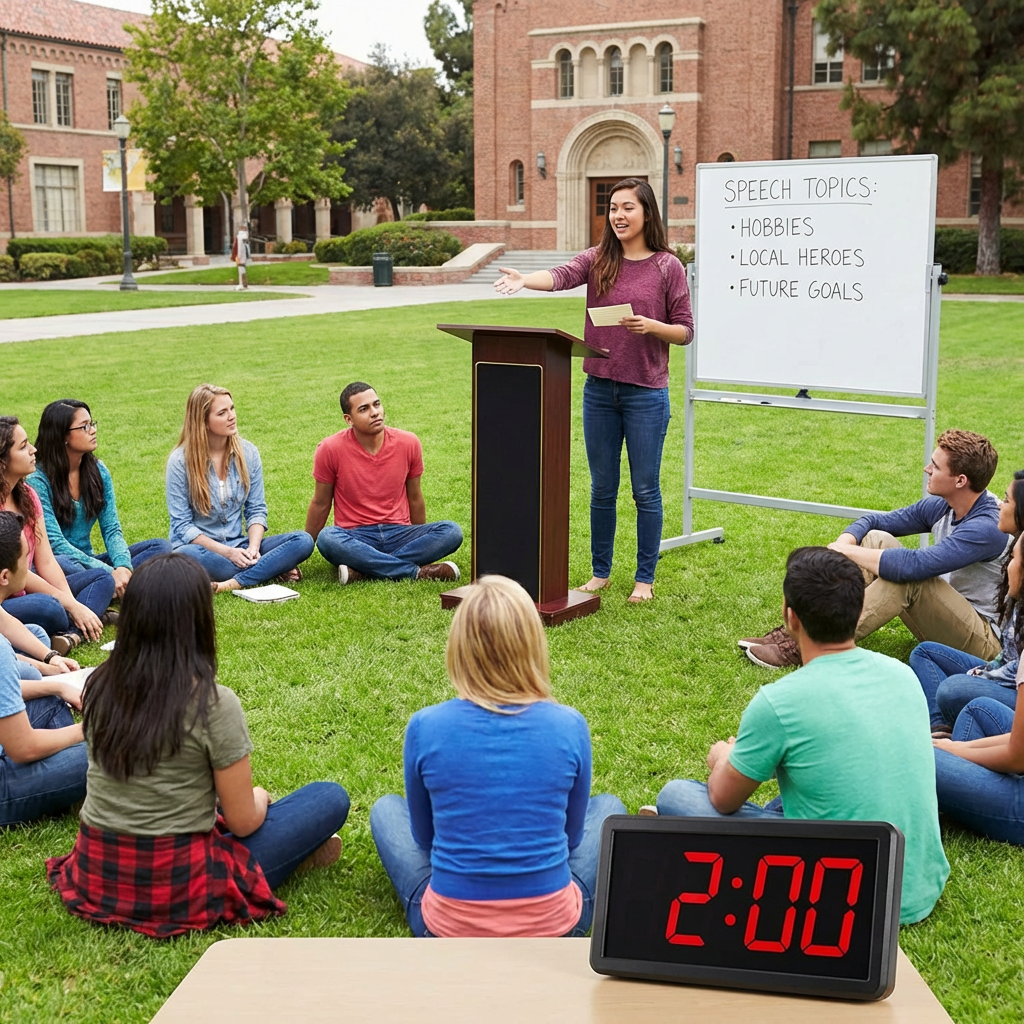
A 2-minute speech is short, but that’s what makes it hard. This list gives you 200+ quick, student-friendly topics you can speak on with confidence.
How to Choose a Great 2 Minute Speech Topic
A good 2-minute topic should be:
-
Easy to explain in one main point
-
Related to student life or daily life
-
Simple enough to give one example
-
Not too emotional or too complex
If you’re stuck, choose something you’ve experienced. Real stories are easier to speak about.
The Best 2-Minute Speech Structure (Simple Template)
Use this structure to keep your speech clear and on time:
-
Hook (10–15 seconds): a question or quick story
-
Main point (20 seconds): what you believe or want to explain
-
One example (45 seconds): a personal story or real example
-
Takeaway (15 seconds): what you want people to remember
Tip: If you can’t explain your topic in one sentence, it’s too big for 2 minutes.
Quick Tip: Turn Your Speech Into Slides (If Your Teacher Wants a PPT)
Some classes ask for a short speech and a few slides. In that case, you don’t need a full deck. You only need 3–5 slides:
-
Title + main point
-
One key reason
-
One example
-
A simple takeaway
If you want to save time, an AI PPT maker like Dokie AI can quickly turn your speech outline into a clean, simple slide structure. That way, you spend less time formatting and more time practicing your speech.
200+ Best 2 Minute Speech Topics for Students
1) Easy Topics for Any Student (25)
-
Why sleep matters
-
How to stop procrastinating
-
The best way to study for exams
-
Why time management is important
-
How to stay motivated
-
Why kindness matters
-
How to deal with stress
-
Why everyone needs a hobby
-
What makes a good friend
-
The value of teamwork
-
Why reading is still useful
-
How to build confidence
-
Why failure can help you grow
-
How to form a good habit
-
The power of a morning routine
-
Why listening is a skill
-
How to handle criticism
-
The importance of gratitude
-
Why exercise helps your brain
-
How music affects mood
-
Why school clubs matter
-
How to set realistic goals
-
Why being curious is powerful
-
How to stay positive
-
Why you should try new things
2) School Life Topics (25)
-
Should homework be limited?
-
Should school start later?
-
How group projects can be better
-
Why students should learn life skills
-
Why note-taking matters
-
How to handle test anxiety
-
Why school rules exist
-
Phones in class: good or bad?
-
The best way to prepare for finals
-
How to deal with peer pressure
-
Why teachers matter
-
Why attendance is important
-
How to be a good classmate
-
The value of asking questions
-
How to stay focused in class
-
Why cheating hurts you
-
How to improve your grades
-
The best way to learn math
-
Why reading out loud helps
-
Why public speaking should be taught
-
How to handle a busy schedule
-
Why breaks help learning
-
The best way to study with friends
-
Why sleep affects grades
-
How to build a study routine
3) Technology and Social Media Topics (25)
-
Is social media good or bad for teens?
-
How screen time affects focus
-
Why privacy matters online
-
How to spot fake news
-
Why passwords should be strong
-
The pros and cons of AI in school
-
Should students use AI tools?
-
Why cyberbullying is serious
-
How online ads affect us
-
Why doomscrolling is harmful
-
The best way to use social media wisely
-
Why you should turn off notifications
-
How to avoid phone addiction
-
Is gaming good for you?
-
What makes a video go viral?
-
How technology helps learning
-
The risks of oversharing online
-
How to be a good digital citizen
-
Why internet safety matters
-
The future of AI jobs
-
Should schools teach coding?
-
How AI changes education
-
Why deepfakes are dangerous
-
How to build better online habits
-
The best apps for students
4) Health and Wellness Topics (25)
-
Why drinking water matters
-
How to eat healthier as a student
-
Why breakfast helps your brain
-
The importance of mental health
-
How to reduce stress fast
-
The value of walking every day
-
Why stretching helps
-
How to improve sleep quality
-
Why caffeine can be risky
-
The impact of energy drinks
-
Why posture matters
-
How to avoid burnout
-
Why you should take breaks
-
How to build healthy habits
-
Why sports are good for you
-
How to stay active without a gym
-
The truth about “detox” trends
-
How to handle social anxiety
-
Why sunlight improves mood
-
How music helps mental health
-
Why you should limit junk food
-
How to protect your eyes from screens
-
Why mindfulness can help
-
How to build self-control
-
The importance of rest days
5) Fun and Creative Topics (25)
-
The best way to spend a weekend
-
Why pets make life better
-
If I could invent something new
-
My favorite tradition and why
-
The best movie genre (and why)
-
The best snack of all time
-
Why cartoons are not just for kids
-
The weirdest rule I would make
-
The best superpower to have
-
A funny lesson I learned
-
The best holiday (ranked)
-
Why everyone should travel
-
If I could switch lives for a day
-
What I would do with $1,000
-
The best school subject (and why)
-
The worst chore (and why)
-
Why music is universal
-
The funniest thing I believed as a kid
-
My favorite app and why
-
The best game to play with friends
-
Why memes are so popular
-
The best food combo (surprisingly good)
-
If I could live anywhere
-
What makes something “cool”
-
My dream job (and why)
6) Persuasive Topics (25)
-
Why students should get more sleep
-
Why school lunches should improve
-
Why recycling should be easier
-
Why volunteering matters
-
Why uniforms are good/bad
-
Why phones should be limited in class
-
Why public transport matters
-
Why we should reduce plastic
-
Why everyone should learn budgeting
-
Why kindness should be taught
-
Why reading should be a habit
-
Why students should learn cooking
-
Why schools should teach mental health
-
Why exams should change
-
Why PE is important
-
Why art classes matter
-
Why music classes matter
-
Why schools should teach internet safety
-
Why bullying must be stopped
-
Why teens should exercise daily
-
Why fast fashion is harmful
-
Why we should plant more trees
-
Why clean energy matters
-
Why community service helps everyone
-
Why learning communication matters
7) Personal Growth Topics (25)
-
What I learned from a mistake
-
A challenge that made me stronger
-
What success means to me
-
A goal I want to reach
-
What motivates me
-
How I learned to be more confident
-
Why discipline matters
-
How to build a new habit
-
Why it’s okay to say “no”
-
How to deal with fear
-
Why you should try again
-
How to stay calm under pressure
-
Why self-respect matters
-
How to make better choices
-
Why honesty matters
-
How to improve communication
-
Why listening is powerful
-
How to be a better leader
-
Why being organized helps
-
How to stop comparing yourself to others
-
Why patience matters
-
How to deal with disappointment
-
Why gratitude changes your mindset
-
How to stay consistent
-
Why learning never stops
8) Society and Environment Topics (25)
-
Why climate change matters
-
How to reduce waste at school
-
Why bees are important
-
Why oceans need protection
-
How plastic affects animals
-
Why clean water matters
-
The impact of fast fashion
-
Why public libraries matter
-
Why community matters
-
What makes a good citizen
-
Why voting matters (for the future)
-
Why rules protect people
-
Why fairness matters
-
How stereotypes hurt people
-
Why respect matters
-
How to be more helpful
-
Why teamwork helps society
-
How to prevent conflict
-
Why peace matters
-
The value of helping others
-
Why kindness spreads
-
Why we should save energy
-
How to use less plastic
-
Why walking is better for cities
-
Why protecting nature helps everyone
Final Tips to Speak Confidently in 2 Minutes
-
Practice once with a timer
-
Keep your main point to one sentence
-
Use one clear example
-
Speak slower than you think you need to
-
End with a strong takeaway
Conclusion
A great 2-minute speech is simple: one point, one example, one takeaway. Pick a topic from this list, follow the structure, and you’ll be ready.
FAQs
1) What is a good 2-minute speech topic?
A good topic is easy to explain, has one main point, and allows one quick example.
2) How many words is a 2-minute speech?
Most students speak about 250–320 words in 2 minutes, depending on speed.
3) How do I start a 2-minute speech?
Start with a question, a short story, or a surprising fact to grab attention.
4) How do I end a 2-minute speech?
End with one clear takeaway sentence. Don’t add new points at the end.
5) Can I do a persuasive speech in 2 minutes?
Yes. Just keep it simple: one claim, one reason, one example, one takeaway.
6) What if my topic feels too big?
Narrow it down. Add a group, a time, or a single question you will answer.
7) Should I use slides for a 2-minute speech?
Only if your teacher asks. If yes, keep it to 3–5 slides.
8) Can AI help me prepare my speech?
Yes. AI can help you outline, rewrite, and practice timing.
9) How can Dokie AI help with a 2-minute speech?
If you need slides, Dokie AI can turn your short outline into a clean 3–5 slide structure quickly, so you can focus on practicing.
10) What is the biggest mistake in short speeches?
Trying to cover too much. One clear point beats five weak points every time.