200+ PPT Topics for College Students (Easy, Fun, and Presentation-Ready)
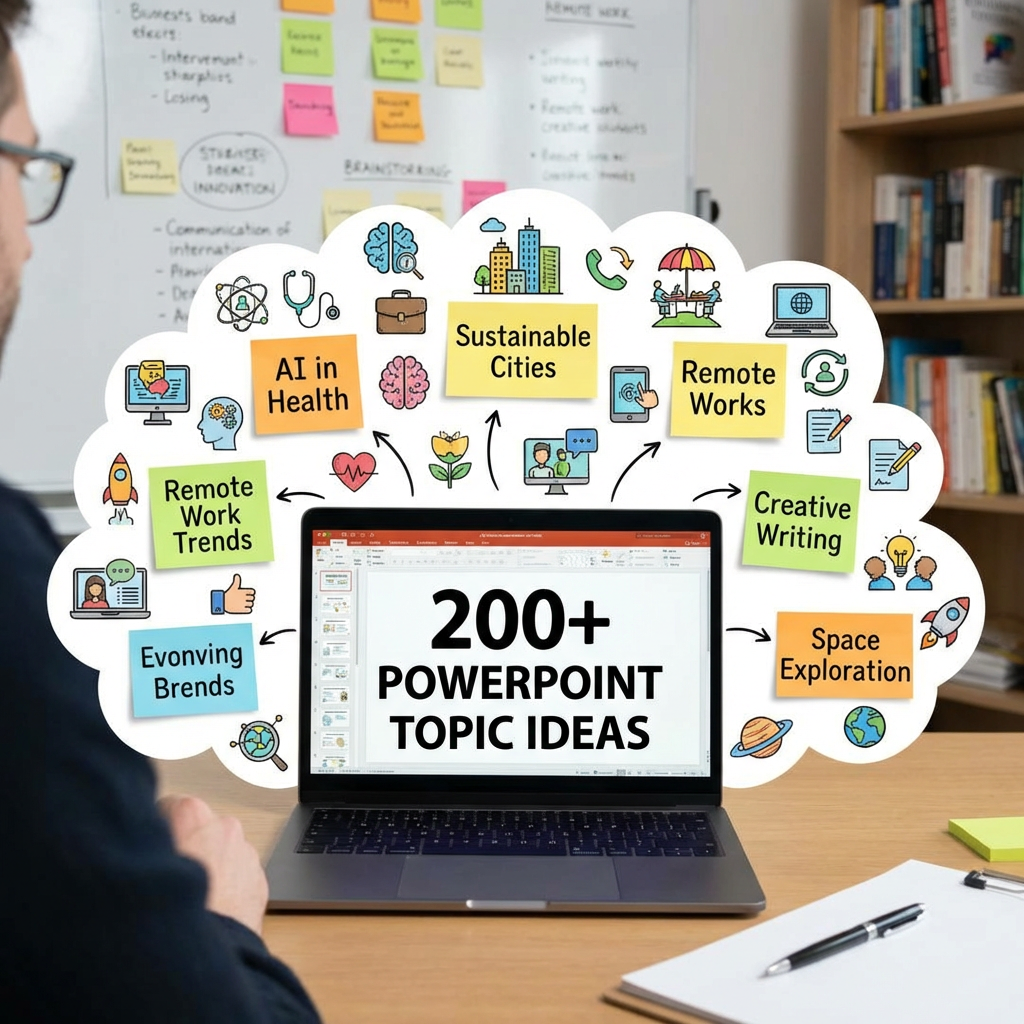
Picking a topic is the hardest part of making a PPT. This list gives you 200+ college-friendly topics you can use for class presentations, clubs, and projects.
How to Pick a Great PPT Topic in 2 Minutes
Use this quick filter:
-
Interest: Would you enjoy researching it?
-
Scope: Can you explain it in 5–10 minutes?
-
Proof: Can you add 1–2 facts, examples, or a small case study?
-
Angle: Can you make it specific (not too broad)?
Example:
“AI” → “How AI changes job interviews” → “3 ways AI screening affects college grads”
Quick Tip: Turn Any Topic into a Slide Outline Fast
Once you choose a topic, write a simple outline: title, 3 main points, 1 example, and a takeaway slide. If you want a faster start, an AI PPT maker like Dokie AI can help draft a clean slide structure from your outline, so you spend less time staring at a blank slide and more time improving your content.
200+ PPT Topics for College Students
1) Easy Topics for Any Class (20)
-
How to build better study habits
-
Time management tips that actually work
-
The science of sleep and learning
-
Why procrastination happens
-
How to set goals and stick to them
-
How stress affects the body
-
The power of routines
-
Why exercise helps your brain
-
How to improve memory
-
How to build confidence in public speaking
-
How to handle failure and bounce back
-
Social media and attention span
-
How music affects mood
-
Why friendships change in college
-
How to budget as a student
-
How to cook simple, healthy meals
-
How to build a strong resume
-
How to network without feeling awkward
-
How to work in a team project
-
How to learn a new skill fast
2) Business and Marketing Topics (30)
-
What makes a brand feel “premium”
-
The basics of a go-to-market plan
-
How influencer marketing works
-
Pros and cons of subscription pricing
-
Why people buy impulse items
-
How ads target people online
-
The psychology of discounts
-
How to run a simple A/B test
-
What makes a landing page convert
-
Email marketing basics for beginners
-
The customer journey explained
-
What is product-market fit
-
How to write a value proposition
-
Branding vs marketing: what’s the difference
-
Why word-of-mouth is powerful
-
How loyalty programs work
-
The basics of SEO for beginners
-
Social media strategy for students
-
How TikTok changed marketing
-
The rise of short video ads
-
What is a marketing funnel
-
How to measure campaign success
-
Market research methods for students
-
Customer personas: why they matter
-
How to pitch a business idea
-
Why some startups fail
-
How to price a new product
-
What is competitive analysis
-
How to build a simple business plan
-
Case study: a famous rebrand that worked
3) Tech, AI, and Data Topics (30)
-
What is AI (simple explanation)
-
AI in education: help or harm
-
AI and privacy: what to watch
-
How recommendation systems work
-
How search engines rank pages
-
What is cybersecurity and why it matters
-
How phishing scams trick people
-
Password habits that keep you safe
-
What is blockchain (simple)
-
How cloud storage works
-
The basics of APIs
-
How apps are made (high level)
-
What is UX design
-
What is product management
-
How data dashboards help teams
-
How to read charts without being fooled
-
Bias in AI systems
-
Deepfakes: risks and solutions
-
How to spot fake online reviews
-
How online ads track you
-
Cookies explained
-
VPNs explained
-
The future of AI agents
-
Robots in daily life
-
The future of self-driving cars
-
AR vs VR: what’s the difference
-
How 5G changes mobile tech
-
The carbon cost of tech
-
Open-source software explained
-
Why “digital minimalism” matters
4) Psychology and Human Behavior Topics (25)
-
What is cognitive bias
-
Confirmation bias in everyday life
-
Why we form habits
-
The psychology of motivation
-
How peer pressure works
-
Why people procrastinate
-
The bystander effect
-
Why we fear public speaking
-
How first impressions form
-
The psychology of persuasion
-
What makes people trust a brand
-
Social media and self-image
-
The impact of loneliness
-
The psychology of jealousy
-
Why people join groups
-
How rumors spread
-
How stress affects decision-making
-
How mindfulness works (simple)
-
The placebo effect
-
Why we dream
-
How emotions affect memory
-
What is imposter syndrome
-
How to handle conflict better
-
Why we avoid hard conversations
-
What makes a healthy relationship
5) Health, Fitness, and Wellness Topics (25)
-
Sleep and productivity
-
How caffeine affects the brain
-
Energy drinks: what to know
-
The basics of nutrition for students
-
How to build a simple workout plan
-
Why walking is underrated
-
Mental health myths
-
Anxiety: signs and coping tools
-
Depression: signs and support (educational)
-
How to prevent burnout
-
The impact of screen time
-
How posture affects health
-
The truth about “detox” trends
-
How hydration affects focus
-
Why stretching helps
-
Healthy eating on a budget
-
How to build a morning routine
-
How to improve sleep quality
-
Stress management tools that work
-
How to make habits stick (health edition)
-
The science of addiction (overview)
6) Society, Culture, and Media Topics (25)
-
How news spreads online
-
How misinformation works
-
Media literacy: how to check sources
-
Cancel culture: pros and cons
-
The impact of streaming on music
-
The creator economy explained
-
Why memes spread so fast
-
How trends start
-
The impact of fast fashion
-
Why thrift culture grew
-
Food culture and identity
-
The history of streetwear
-
The impact of global travel on culture
-
How languages evolve
-
The role of comedy in society
-
The ethics of reality TV
-
How sports shape culture
-
The rise of esports
-
Why people love true crime
-
Parasocial relationships explained
-
How celebrities shape public opinion
-
The future of social platforms
-
Internet privacy and culture
-
Why attention is the new currency
-
What makes a movie “classic”
7) Environment and Sustainability Topics (20)
-
Climate change basics for beginners
-
What is a carbon footprint
-
Plastic pollution and solutions
-
Recycling myths
-
Fast fashion and waste
-
Food waste and simple fixes
-
Electric cars: benefits and limits
-
Renewable energy types
-
Solar energy pros and cons
-
Wind energy pros and cons
-
How cities can be greener
-
Public transport vs car culture
-
Sustainable diets (simple overview)
-
Water conservation tips
-
How climate affects health
-
Why bees matter
-
Ocean pollution and solutions
-
Greenwashing: how to spot it
-
Secondhand markets and sustainability
-
The future of clean energy
8) Education and Campus Life Topics (15)
-
Best study methods for college
-
How to choose a major
-
How to pick internships
-
How to handle group projects
-
Campus mental health support ideas
-
How to build a club community
-
How to balance work and school
-
How to ask for help in college
-
The value of office hours
-
How to build better class notes
-
Tips for exam prep
-
How to manage online classes
-
How to avoid burnout in finals week
-
Building healthy roommate rules
-
How to manage a busy schedule
9) Career and Professional Skills Topics (20)
-
How to write a strong resume
-
How to write a cover letter
-
Interview tips for beginners
-
How to answer “Tell me about yourself”
-
How to negotiate a job offer (simple)
-
Personal branding for students
-
LinkedIn profile tips
-
How to build a portfolio
-
How to ask for referrals
-
How to follow up after interviews
-
How to give a good presentation
-
How to run a meeting
-
How to write clear emails
-
How to manage your first job
-
Remote work basics
-
Professional etiquette at work
-
How to handle feedback
-
How to set career goals
-
How to avoid workplace burnout
-
Communication skills for leadership
10) Fun, Creative, and “Easy A” Topics (25)
-
The best study playlist (and why)
-
Why your phone is ruining your focus
-
The science of being late
-
The history of coffee
-
The most useful apps for students
-
Ranking campus food spots (fun)
-
How to survive finals week
-
The best travel hacks for students
-
Why people love conspiracy stories
-
What makes something go viral
-
The funniest “college life” stereotypes
-
How roommates become friends (or not)
-
The best hobbies to try in college
-
The psychology of crushes (light)
-
Why we love nostalgia
-
The history of memes
-
The most iconic inventions of the last 50 years
-
How sports affect school spirit
-
The pros and cons of living on campus
-
The best ways to make new friends
-
How to build a routine that sticks
-
Why some people hate small talk
-
The art of telling a good story
-
How to plan a low-cost trip
-
The best college “life lessons”
Bonus: 10 Topic Templates You Can Reuse
Use these to create endless topics:
-
“3 reasons why ___ matters to college students”
-
“A beginner guide to ___”
-
“___ myths vs facts”
-
“How ___ changed in the last 10 years”
-
“The pros and cons of ___”
-
“A case study of ___”
-
“What causes ___ and what to do”
-
“The future of ___”
-
“How to do ___ in 5 steps”
-
“___: what works, what doesn’t, and why”
Conclusion
The best PPT topic is specific, easy to explain, and backed by a few real examples. Pick one idea from this list, narrow it down, and build a simple slide outline.
FAQs (10)
1) What are good PPT topics for college students?
Good topics are easy to explain in 5–10 minutes, have clear examples, and match your class (business, tech, health, culture, and more).
2) How do I pick a topic fast?
Choose something you care about, then narrow it to one question you can answer in your talk.
3) What topics are easiest for a short presentation?
“How-to” topics and “3 key points” topics are the easiest because they have a clear structure.
4) How many slides should I use?
For 5–10 minutes, 6–10 slides is usually enough.
5) What if my topic is too broad?
Add a time limit, a group, or a place. Example: “Social media” → “Social media and sleep for college students.”
6) Can I use persuasive topics in college?
Yes. Topics with two clear sides (pros vs cons) are great for class discussion.
7) How do I make my PPT more interesting?
Add one story, one real example, and one visual per section.
8) Is it okay to pick a fun topic?
Yes—if you still organize it clearly and teach or prove something.
9) Can AI help me build slides from my topic?
Yes. AI tools can draft an outline and slide titles, then you edit and add your own examples.
10) What’s the biggest mistake students make?
Trying to cover too much. A smaller, clearer topic almost always earns a better grade.