The Symbolism of the Glass Castle: Themes, Motifs, and Meaning
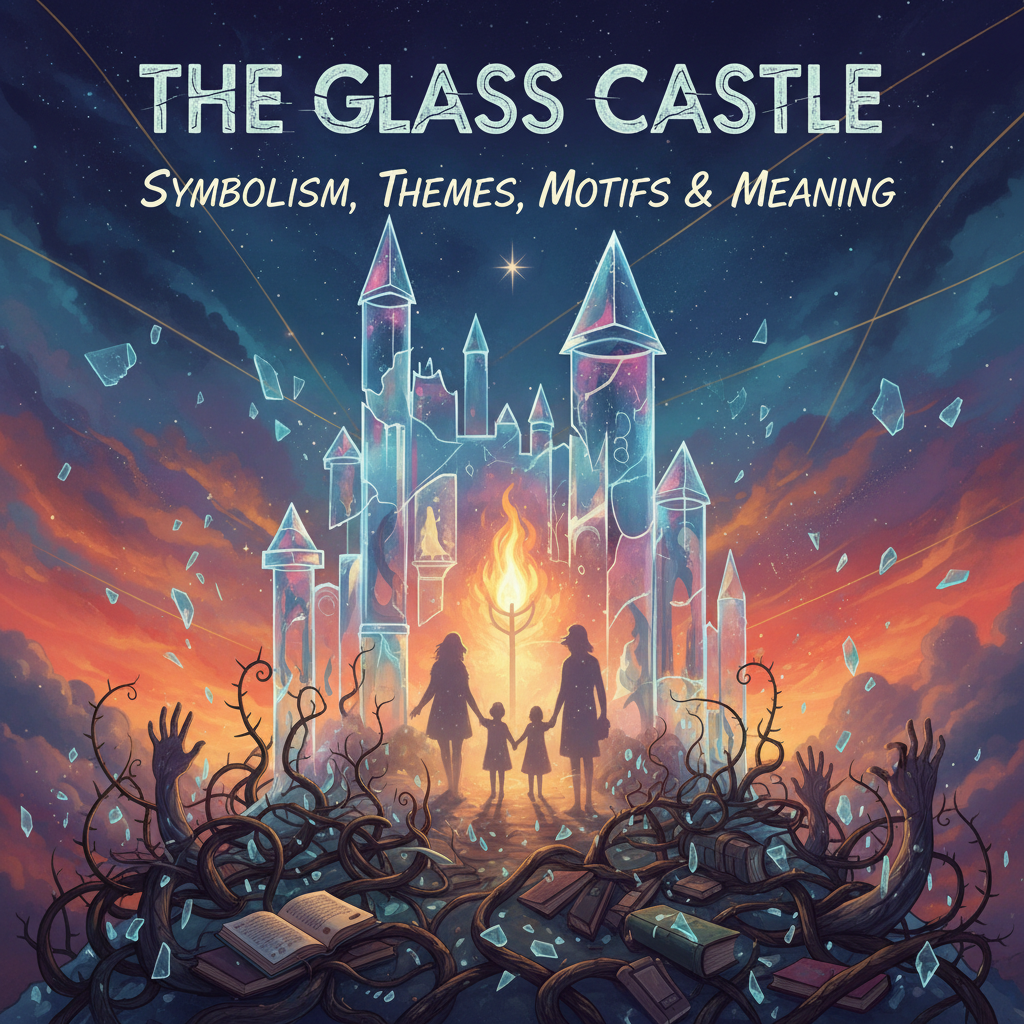
The Glass Castle by Jeannette Walls is more than a memoir about an unconventional childhood. It is also a layered story filled with symbols that reveal the emotional truths beneath poverty, instability, love, and resilience. The book’s imagery gives readers a way to understand not only what happened to Walls and her family, but also what those experiences meant. From the dream of the glass castle itself to fire, stars, and the desert landscape, symbolism plays a central role in shaping the memoir’s impact.
Understanding these symbols helps readers see why the book remains so memorable. They turn ordinary objects and recurring images into reflections of hope, illusion, survival, and identity.
Why symbolism matters in The Glass Castle
In memoir writing, symbolism can deepen the meaning of real-life events without changing the truth of the story. Walls uses symbols to connect childhood memories with larger themes such as freedom, neglect, ambition, shame, and self-reliance. These recurring images allow readers to see the contrast between the parents’ romantic ideals and the harsh reality their children face.
Rather than presenting every moment as a simple fact, Walls shows how children interpret the world through imagination. Symbols therefore become a bridge between a child’s perspective and an adult’s understanding.
The glass castle itself
The most obvious and important symbol in the memoir is the glass castle. Rex Walls repeatedly promises to build a magnificent home for the family, complete with modern comforts and a detailed design. To the children, especially Jeannette, the idea of the glass castle represents possibility. It is a dream that suggests their lives might one day become stable, beautiful, and extraordinary.
Yet the castle is never built. Because of this, it also symbolizes illusion and broken promises. Rex uses the fantasy of the house to keep hope alive, but he also uses it to avoid responsibility in the present. The castle becomes a symbol of the gap between imagination and action.
Its material matters too. Glass is transparent and beautiful, but it is also fragile. That fragility mirrors the family’s life: full of dazzling ideas, but easily shattered by addiction, poverty, and chaos. In this way, the glass castle symbolizes both the brilliance and the weakness of Rex’s vision.
Fire as danger and transformation
Fire appears throughout the memoir and carries several meanings. One of the earliest major incidents involves Jeannette being badly burned while cooking at a very young age. This moment shows the literal danger of her upbringing, where children are expected to care for themselves before they are ready.
But fire does more than symbolize harm. It also represents transformation, power, and survival. Jeannette learns from painful experiences rather than being defined by them. Fire in the memoir often marks moments when innocence is threatened, but it also suggests that suffering can produce strength.
Rose Mary, Jeannette’s mother, calls Jeannette a favorite child because she is “on fire,” linking the image to spirit and energy. This gives fire a double meaning: it destroys, but it also energizes. The symbol captures the intensity of Jeannette’s personality and the dangerous environment that helps shape it.
Stars and the night sky
One of the memoir’s most touching symbols is the stars. In a famous scene, Rex gives Jeannette a star for Christmas because he cannot afford a traditional gift. For a child, this gesture feels magical. It reflects the father’s ability to turn deprivation into wonder through storytelling and imagination.
The stars symbolize limitless possibility. They suggest a world larger than the family’s immediate struggles and remind Jeannette that beauty can exist even in hardship. At the same time, the gesture also exposes the limits of her father’s love. He offers a symbolic gift instead of material care. The moment is emotionally rich because it contains both tenderness and inadequacy.
The night sky throughout the memoir often signals freedom. It is wide, open, and beyond ownership. For a family that rejects convention and frequently lives on the margins, the stars symbolize the seductive appeal of living outside ordinary rules.
The desert and open land
The desert landscape of the family’s early life symbolizes both freedom and emptiness. For Rex and Rose Mary, the open spaces represent a life unbound by social expectations. They value movement, independence, and a rejection of middle-class routines. In their eyes, the desert is alive with adventure.
For the children, however, the same setting often reflects instability and exposure. The openness of the land can feel exciting, but it also means vulnerability. There is little protection, little structure, and little certainty. This dual meaning is central to the memoir: what the parents see as liberation, the children often experience as neglect.
The desert therefore symbolizes the family’s philosophy itself. It is beautiful and harsh at the same time, much like the life they lead.
Holes, foundations, and unfinished structures
Another striking symbol in the memoir is the unfinished foundation for the glass castle. Rex digs a hole where the house is supposedly going to be built, but nothing meaningful ever rises from it. The hole eventually becomes a place where the family throws trash.
This image is powerful because it symbolizes wasted potential. The foundation should have been the start of something secure, yet it becomes a physical reminder of failure. Dreams without discipline collapse into disorder.
More broadly, unfinished structures in the memoir point to the absence of a stable home life. The children grow up surrounded by plans that never become reality. The lack of completion symbolizes emotional inconsistency and broken trust.
Books, learning, and self-invention
Books in The Glass Castle symbolize escape, education, and self-creation. Even in a chaotic household, learning offers Jeannette a path forward. Reading allows her to imagine a different future and to build an identity beyond the limitations of her family.
This symbolism is important because it contrasts with the family’s physical instability. Houses may fall apart, and money may disappear, but knowledge gives Jeannette something no one can take away. Education becomes a quieter, more realistic version of the glass castle: a means of building a better life.
The memoir suggests that while fantasy can inspire, practical tools like literacy, discipline, and critical thinking are what truly make change possible.
Trash and disorder
In several parts of the memoir, trash and clutter symbolize decline. The family’s homes often become overwhelmed by dirt, broken objects, and disorder. These conditions reveal what the parents refuse to confront: their choices have consequences that can no longer be hidden by charm or philosophy.
Trash symbolizes more than poverty. It reflects avoidance and emotional neglect. Problems pile up because no one takes responsibility for them. The physical environment mirrors the internal state of the family, where unresolved issues are ignored until they become impossible to manage.
This imagery is especially effective because it strips away romantic ideas about unconventional living. Disorder becomes a visible sign of damage.
Movement and rootlessness
The Walls family is constantly moving, and this pattern becomes symbolic in itself. Their motion suggests freedom, spontaneity, and resistance to control. Rex and Rose Mary treat movement almost like a heroic way of life.
For the children, however, constant relocation symbolizes rootlessness. It prevents lasting friendships, consistent schooling, and a stable sense of belonging. Home is not a fixed place but a shifting idea, often tied more to hope than to actual safety.
This symbol helps explain one of the memoir’s central tensions: the difference between adventure chosen by adults and instability imposed on children.
What the symbols reveal about Rex and Rose Mary
Much of the memoir’s symbolism points back to Jeannette’s parents. Rex is closely associated with grand visions, stars, fire, and the glass castle itself. These symbols show his charisma, intelligence, and imaginative power. They also reveal his unreliability. He can make life feel magical, but he cannot provide consistency.
Rose Mary, meanwhile, is linked to art, nonconformity, and emotional detachment. Her values often elevate creativity and personal freedom above practical parenting. The symbols surrounding the family’s homes and possessions highlight the cost of that outlook.
Together, the parents symbolize a complicated truth: love and damage can exist in the same relationship. The memoir does not reduce them to villains or heroes. Its symbolism preserves that complexity.
Major themes connected to the symbolism
- Hope vs. reality: The glass castle and the stars reflect dreams that inspire but do not solve material problems.
- Freedom vs. responsibility: The desert and constant movement show the beauty and danger of living without structure.
- Resilience: Fire and education suggest that hardship can produce strength when paired with determination.
- Illusion vs. truth: Unfinished foundations and accumulating trash reveal what fantasy tries to hide.
- Identity: Jeannette’s growth shows how a person can honor the past without being trapped by it.
Final thoughts
The symbolism of The Glass Castle is one reason the memoir continues to resonate with readers. Its symbols are not decorative; they are essential to the book’s emotional and thematic power. The glass castle represents a dream that is beautiful but fragile. Fire captures both pain and vitality. Stars offer wonder, while unfinished homes and clutter expose disappointment and neglect.
Together, these symbols help tell a story about what children inherit from their parents, what they must survive, and what they can build for themselves. Jeannette Walls shows that even when life is unstable, meaning can still emerge from memory. The symbols in her memoir remind us that the stories people tell themselves can either trap them in illusion or guide them toward transformation.